Felix Rieseberg’s Fable 5.2 game prompted this collection: what other AI-built games and 3D experiments are worth opening beyond the clips shared on social media? The selection ranges from tiny planets and code-generated creatures to a boss duel in a flooded cathedral.
The projects show different ways to use AI in development. Some creators report generating code and assets, while others document how they worked with coding agents. Three.js Procedural Animals demonstrates what the resulting code can generate in the browser.
The descriptions draw on creator accounts, repositories and official listings.
1. Felix Rieseberg’s Fable 5.2 game
The starting point: a long-running game-building experiment.
Rieseberg reports that Fable 5.2 produced the game and its models, textures and sounds during an approximately eight-hour run. He describes working without human feedback during the run and estimates the API-equivalent cost at about $550. Those figures are his account of this particular experiment. Creator’s post
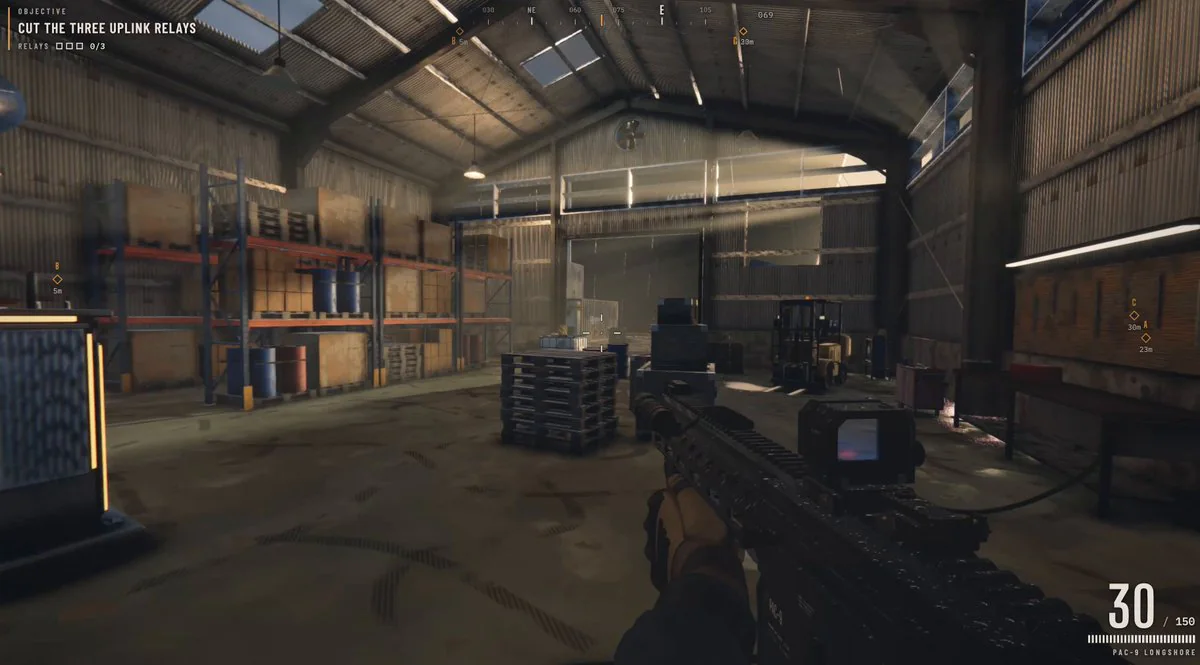
What earns it the opening spot is the scope of the experiment: game implementation and assets together, rather than an isolated visual effect. It is a useful starting point for comparing this approach with the more iterative development stories below.
Treat the reported time and cost as details of this experiment, not a general budget for building a game. The demonstration alone does not establish how reliably another developer could reproduce the result.
Availability note: the artifact timed out during the 10 November source check. Its rendering library was not independently confirmed, so this entry is not labelled a Three.js game.
The rest of the shortlist
| Project | Why it belongs here |
|---|---|
| A Game About Capybaras Delivering Food | A documented example of AI production combined with hands-on design |
| Tiny Skies | A small explorable world with a public development repository |
| Pieter Levels’ Flight Simulator | A direct example of an AI-built multiplayer browser game |
| Jayden Davis’s Claude FPS Shooter Demo | A first-person shooter prototype shared as a playable Claude artifact |
| Three.js Procedural Animals | A clear example of AI-authored code generating 3D content at runtime |
| Evensong | A dark fantasy boss duel staged in a flooded cathedral |
| Saltfire | Armed powerboat racing with rough seas and boat wakes |
2. A Game About Capybaras Delivering Food
For the development story as much as the game.
Accept an order, collect the food and ride a scooter to the destination without losing the stack on your back. Creator Leo credits Claude Code and Three.js alongside separate tools for imagery, 3D assets and audio. The game took first place at Vibe Jam 2026. Making-of · Competition results
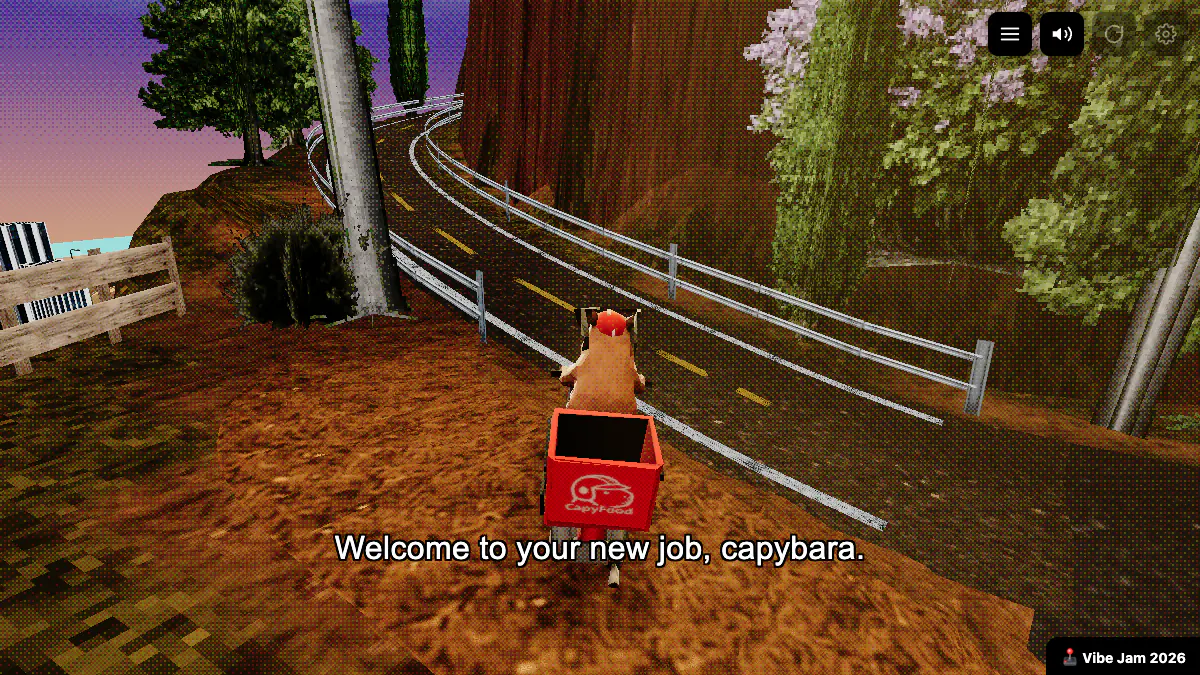
The detail worth keeping is the human work. Leo describes designing and testing the game, adjusting its feel and constructing the map manually with an editor built for the project. AI-generated implementation did not remove creative direction. Creator’s account
The making-of is the reason I would send a developer here first. It shows how an editor, debugging controls and repeated playtesting can support a specific game idea. There is something concrete to learn from that workflow beyond the finished visuals.
Open the game · Read the making-of
3. Tiny Skies
For a small world you can explore—and a project you can inspect.
Danny Limanseta’s Tiny Skies centres on flying around a small world with other players. Its public repository documents the Three.js multiplayer implementation and contains exported Cursor development conversations. The official jam results awarded it Most Polished. Repository · Development record · Competition results
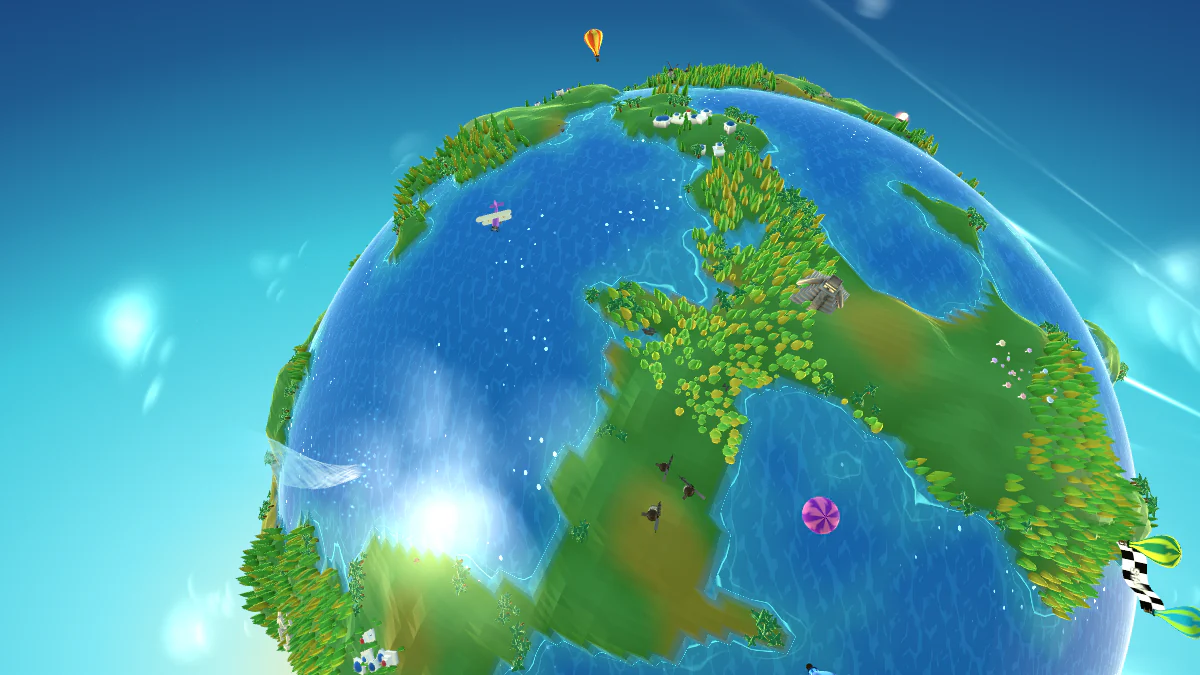
A compact globe is an appealing alternative to the promise of an endlessly expanding map: the setting has a clear shape, and the flying gives you a way to move through it.
For developers, the repository adds a second reason to visit. You can inspect the application around the scene, including its client/server split, rather than judging the work from a recording. The documented tool is Cursor; the evidence does not identify one model behind the entire project.
Open Tiny Skies · Browse its repository
4. Pieter Levels’ Flight Simulator
For the straightforward browser-game example.
The game’s own landing page credits Pieter Levels, Cursor and Three.js, and describes the project as an AI-made multiplayer flight simulator. Official game page
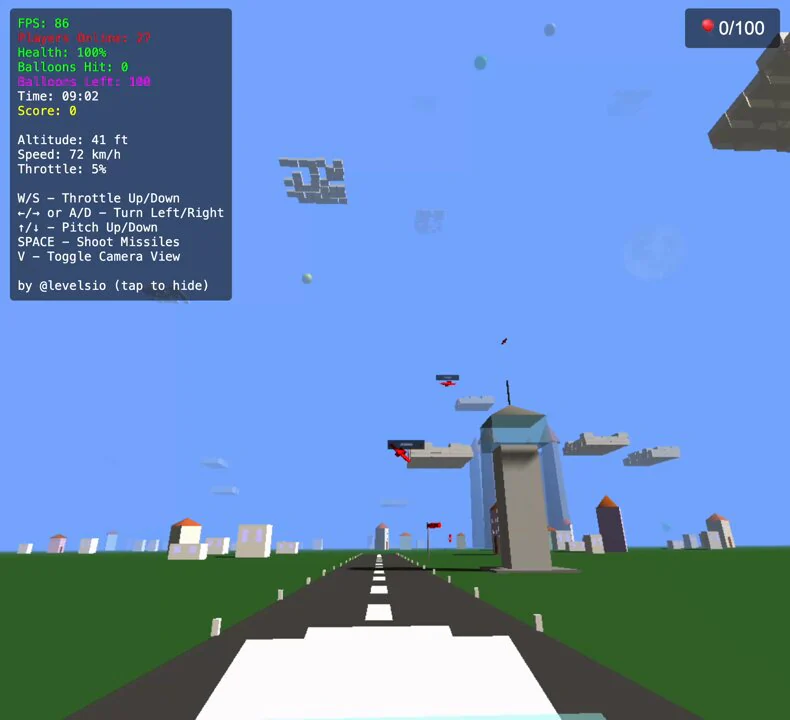
A flight simulator gives a 3D world an immediate purpose: take off, navigate and share the airspace. That is the reason to include this alongside the more experimental entries.
When you open it, pay attention to the relationship between the aircraft, camera and controls. A game’s appeal has to survive movement and interaction; a good screenshot only captures one part of it.
5. Jayden Davis’s Claude FPS Shooter Demo
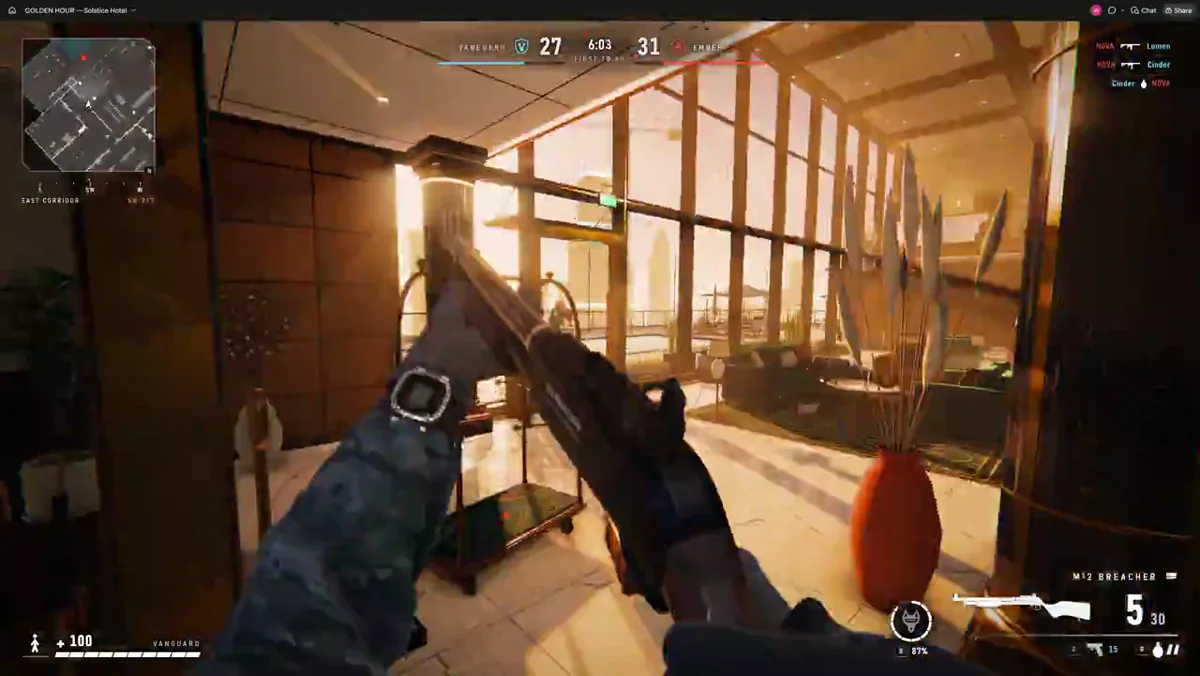
Jayden Davis shared a first-person shooter prototype as a Claude artifact on 11 November. His announcement includes gameplay footage and links to the demo. Creator’s post
6. Three.js Procedural Animals
A technical showcase, not a complete game.
Majid Manzarpour’s project constructs animals through code: bodies are shaped from signed distance fields, connected to a skeleton, given a coat and animated. His announcement credits Claude Opus 5.5; the public repository explains the implementation. Creator’s announcement · Repository

The important distinction is between the tool that helped write the program and the program that runs in the browser. An AI coding model can produce an algorithm; that algorithm can then generate a creature without a fresh model response for every frame.
This is the most direct procedural example in the selection. It is worth inspecting for people interested in generating content rather than importing a finished model. The project’s “no models” description concerns pre-made assets—not the absence of 3D geometry, dependencies or application downloads.
Open the interactive demo · Read the source
7. Evensong
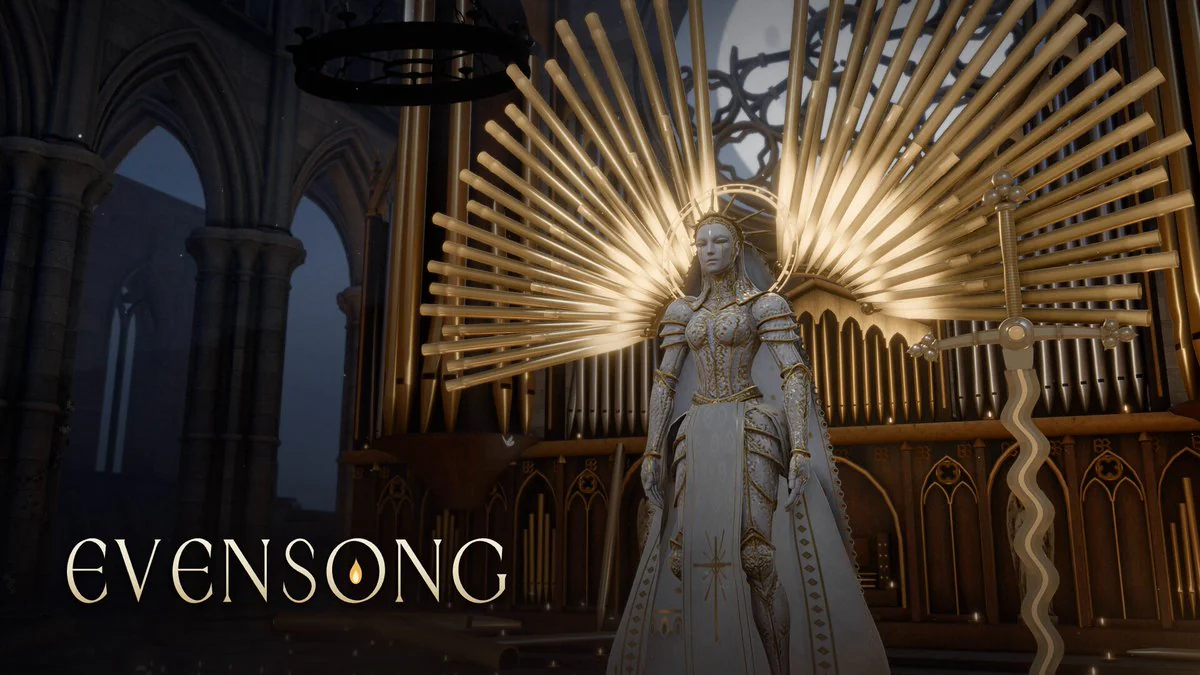
Kevin Ngo’s Soulslike browser demo stages a boss duel in a flooded cathedral. Candlelight reflects off the water as an armored opponent raises a greatsword. Ngo credits Claude Fable 5.2 for the demo and says he used Tripo for character models, with Claude rigging and animating them. Gameplay post · Asset credits
8. Saltfire
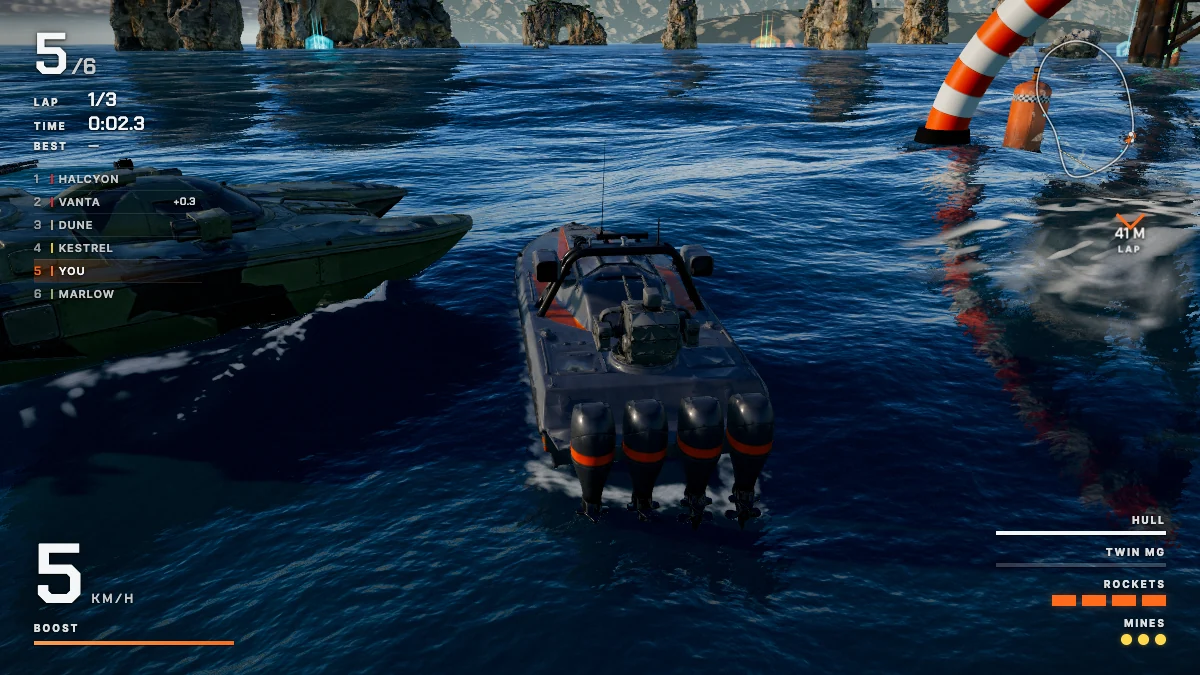
In Higgsfield’s Saltfire, you race an armed powerboat against five computer-controlled rivals. The course and weather change the sea conditions, so the swell shapes how the boats handle. Higgsfield says Claude Fable 5.2 built the game in Three.js and its image-to-3D tools turned generated boat images into textured models. Higgsfield’s gameplay post · Build guide
Are these all “AI-generated games”?
Not in the same sense.
AI-built or AI-assisted describes the development process. A creator uses an AI system to help write code, generate assets or build tools. It does not tell you how much design, selection, testing or revision a person contributed. The Capybaras making-of documents that distinction particularly well. Making-of
Procedural generation describes a program generating content from rules. In the animal showcase, the browser constructs geometry and animation through the implemented system. That is a different activity from asking an AI model to create the implementation in the first place. Project documentation
A game can combine these approaches. It can also be AI-assisted without generating its world procedurally. Treat the labels separately rather than using “AI”, “Three.js” and “procedural” as interchangeable terms.
Where I would start
Start with Felix’s demonstration for the experiment that prompted the article. Read Capybaras’ making-of for the clearest account of a developer’s decisions. Explore Procedural Animals for the code-generated 3D angle.
Those are three different reasons to be interested. Keeping them separate makes this a more useful collection than a leaderboard based on impressive clips alone.
Sources and checking notes
Project links, creator statements and official records are linked beside the relevant claims. Awards are used as selection signals, not substitutes for a review. No social-media view count is presented as a player count, and no mobile-performance or accessibility testing is claimed.
Claude Fable 5.2’s release is documented in Anthropic’s 9 November 2026 announcement. Game-building time, cost and AI involvement remain attributed to the respective creators.
Putting AI to work on your website?
Choosing a model is one part of a working feature. If your business needs a support assistant, content workflow or connection to an existing system, I can help define and build the interface, integrations and checks it needs.
